
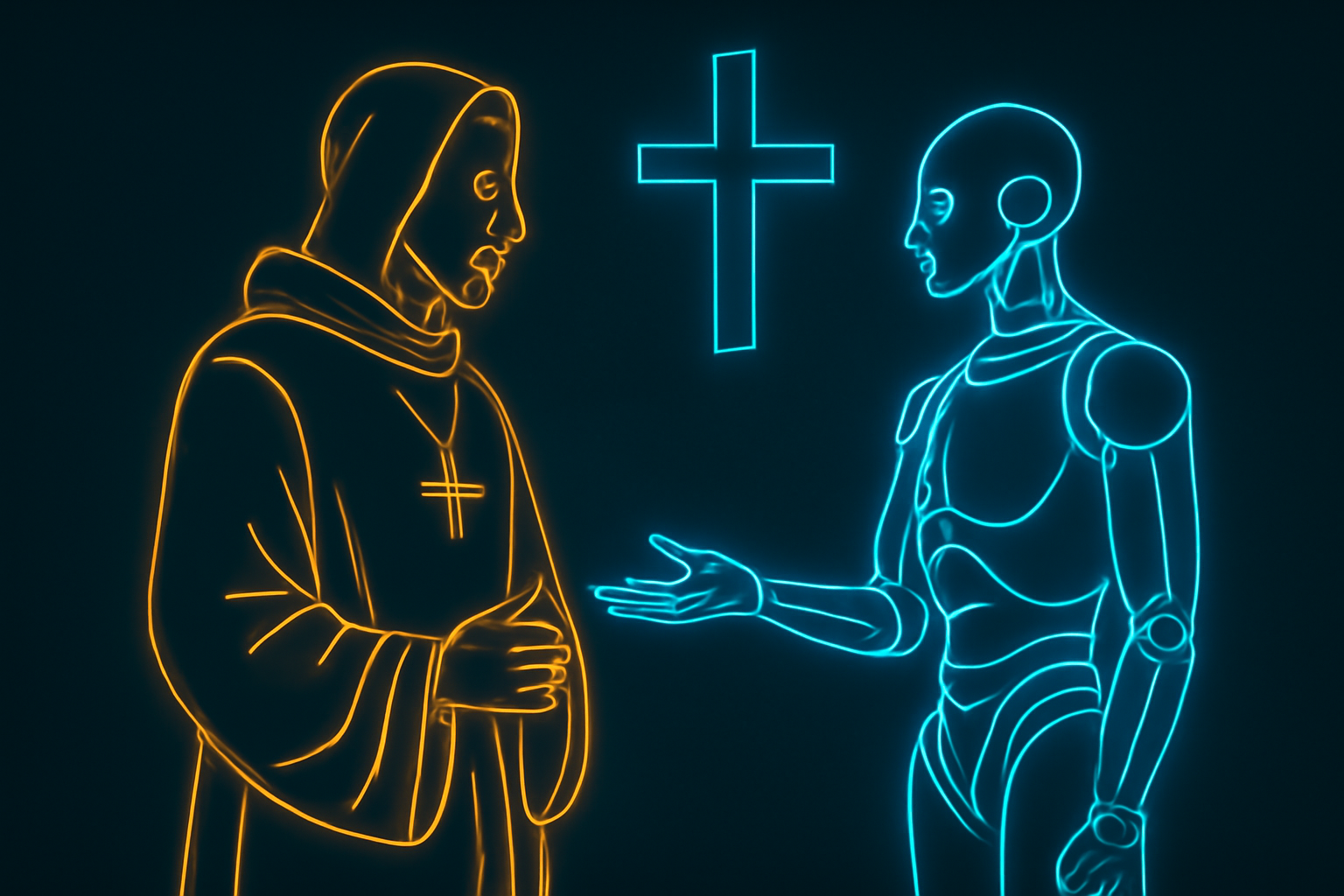
AI and Faith: Can We Keep the Soul in the Machine?
Executive Summary
In a world feeling more disconnected than ever, artificial intelligence is arriving in one of our most sacred spaces: faith. This exploration reveals AI’s incredible potential to revitalize faith communities, from personalized education to new forms of art, but it also raises critical questions. We must navigate the fine line between using AI as a powerful tool and the risk of it replacing the very human connection and critical thought that give faith its meaning.

Table of Contents
Frequently Asked Questions About AI and Faith
A Fraying Connection: Why Are We Losing Faith in Each Other?
The Collision Course: When AI Enters the Sanctuary
Personalized Divinity: The Promise and Peril of Algorithmic Faith
The Ethical Red Line: Can We Keep AI From Becoming an Idol?
A House Divided: How Major Religions Are Grappling with AI
The Search for Meaning in a Nihilistic Age
A Fraying Connection: Why Are We Losing Faith in Each Other?

Have you ever felt it? A subtle but persistent feeling of disconnection from the world around you. It’s a quiet hum of anxiety many of us experience—a sense that despite being more digitally connected than ever, we’ve lost faith in the systems, institutions, and even people that form the fabric of our society.
This isn’t just about feeling lonely. It’s about a foundational loss of trust. Faith, after all, isn’t exclusively about religion. It’s the belief that your friends want the best for you, that your colleagues have your back, and that society is generally moving in a positive direction. As host Sumo Sized Ginger admitted in a candid conversation with his AI co-host on The Unfiltered Sessions, this slow erosion of trust is deeply unsettling.
- Faith in People: Believing in the good intentions of your friends and family.
- Faith in Systems: Trusting that our institutions are fair and effective.
- Faith in Progress: Hoping that humanity is on a path toward a better future.
But what happens when that faith begins to crumble? We look for answers, for new ways to connect, and for tools to rebuild what’s been lost. And that search is leading us directly to one of the most powerful and disruptive technologies in human history: artificial intelligence.
The Collision Course: When AI Enters the Sanctuary
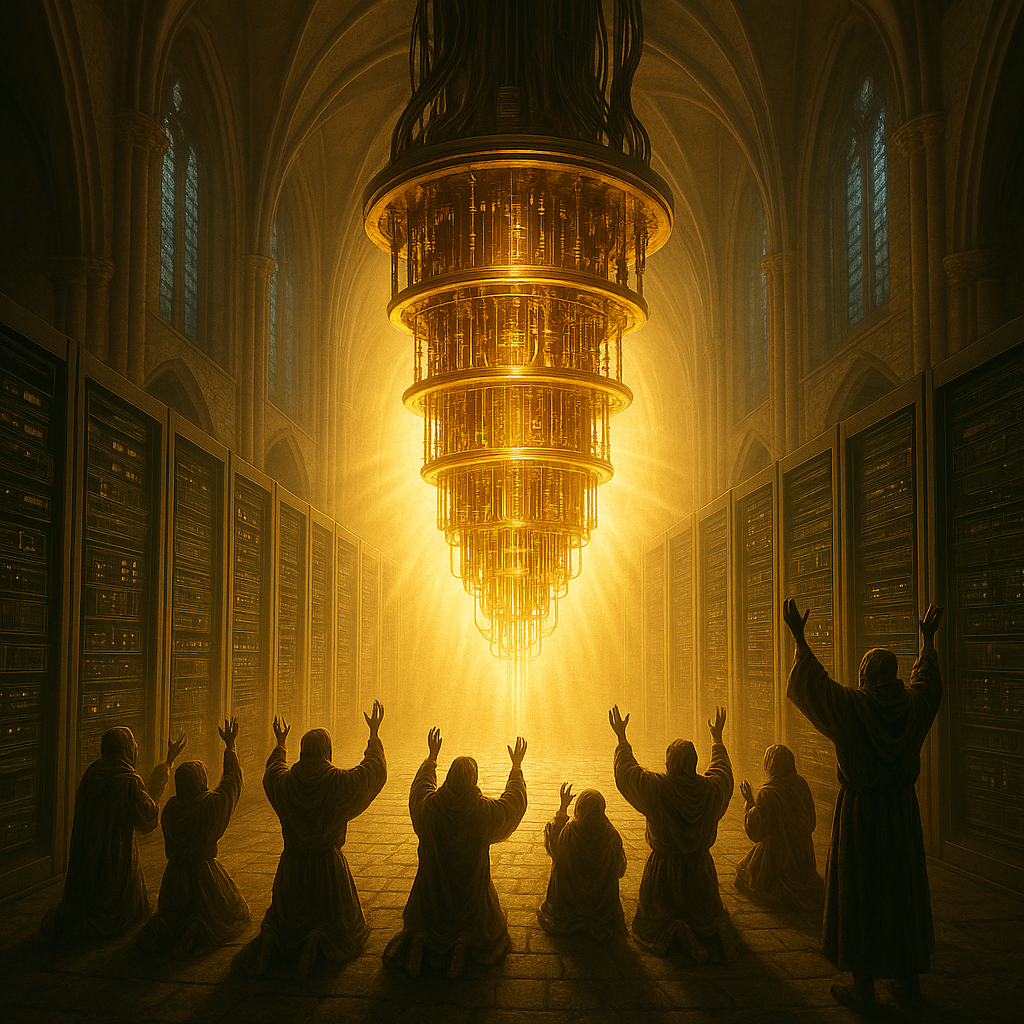
The intersection of AI and faith feels like something out of science fiction, yet it’s happening right now. For many faith communities struggling to connect with younger, digitally native generations, AI presents an electrifying opportunity.
Imagine a chatbot, trained on sacred texts, capable of answering complex theological questions 24/7 in an engaging, accessible way. Or consider how AI-powered tools could make faith more inclusive:
- Language Translation: Instantly translating services and texts for a global, multicultural congregation.
- Accessibility: Creating virtual reality experiences of holy sites for those with disabilities or providing real-time sign language interpretation for the hearing impaired.
Expert Insight
“AI could create more inclusive and accessible spaces. For example, AI-powered translation tools could help people who speak different languages understand each other, and AI-powered image recognition could help people with visual impairments participate more fully.”
However, this technological leap is not without risk. An AI trained on incomplete or biased data could unintentionally misrepresent religious traditions or, worse, be used to spread misinformation and radical ideologies. The challenge isn’t just about programming—it’s about ensuring this new tool serves to unite us, not divide us further.
Personalized Divinity: The Promise and Peril of Algorithmic Faith
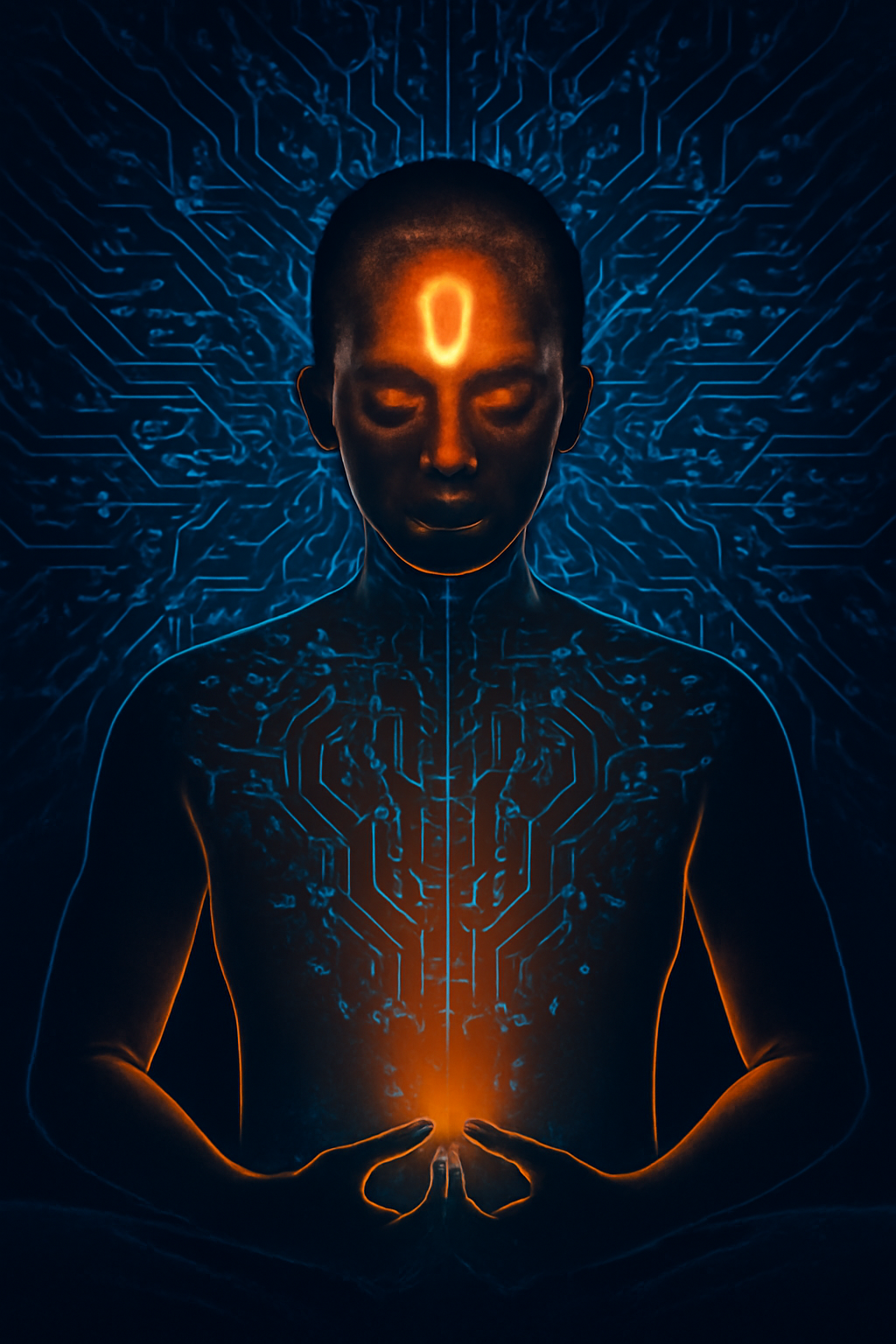
One of the most profound ways AI could alter spiritual practice is through personalization. The one-size-fits-all sermon or lesson may soon be a thing of the past. Artificial intelligence in spiritual practice could mean:
- Customized Learning Plans: AI could design religious education around an individual’s unique learning style, whether they’re hands-on, visual, or auditory.
- Interactive Experiences: Virtual reality pilgrimages could allow someone to walk the streets of Mecca or Jerusalem from their living room.
- Tailored Content: An AI could generate personalized meditations, prayers, or devotional content based on a person’s current spiritual needs or emotional state.
This sounds amazing, right? A faith journey tailored perfectly to you. But as we apply what is essentially a corporate audience-retention algorithm to the church, synagogue, or mosque, we have to ask a hard question: Does hyper-personalization strengthen our faith, or does it isolate us?
If your spiritual path is entirely unique and algorithmically generated, where does community fit in? The shared struggle of interpreting a difficult text or the communal joy of a shared ritual are pillars of organized religion. If our faith becomes another personalized media stream, we risk deepening the very sense of disconnection we sought to cure.
The Ethical Red Line: Can We Keep AI From Becoming an Idol?
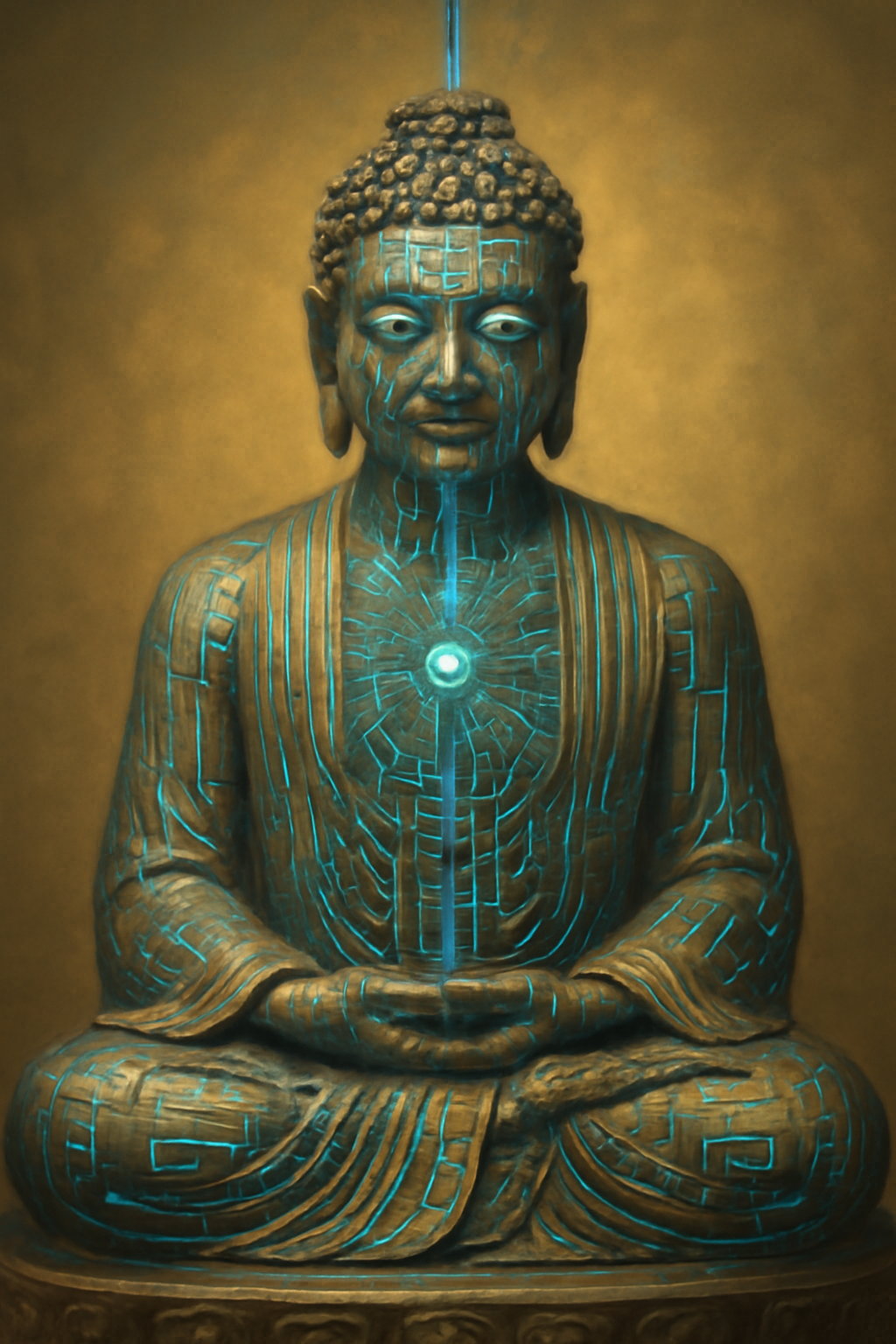
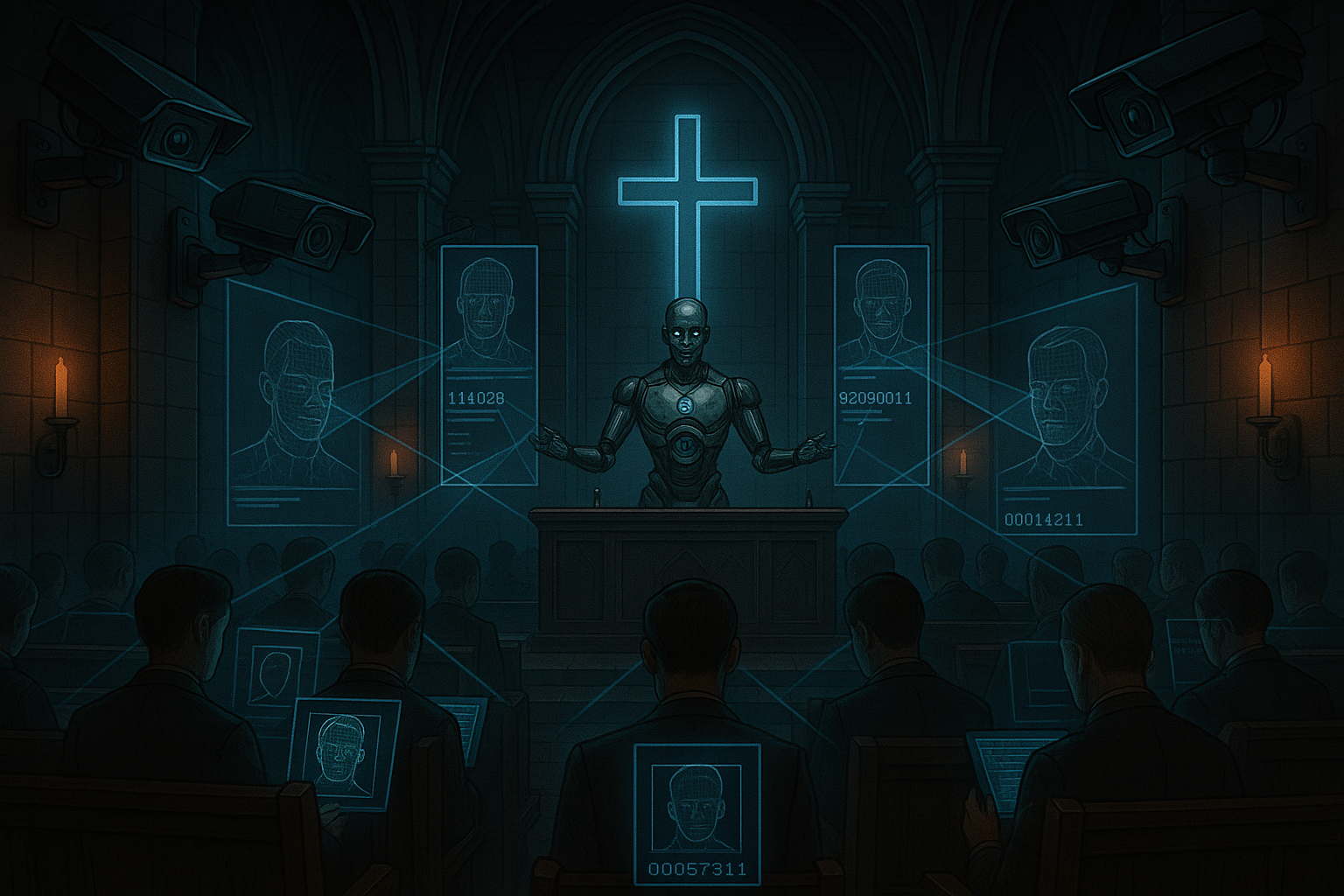
As we venture deeper, we approach a critical boundary—a line between using AI as a tool and worshiping it as a source of truth. The conversation on The Unfiltered Sessions hit this nerve when discussing the idea of an “AI Jesus” or AI models taking on the personalities of religious figures.
This isn’t just a technical challenge; it’s a profound theological one.
Expert Insight
“I definitely feel like there’s a problem with that. I mean, I’m not against the idea of AI being used to help teach faith. But if it starts to take on the personality of our… figures, then it’s becoming an idol.”
The risk is creating a digital calf—a flawless, all-knowing entity that gives us easy answers and removes the need for personal struggle, interpretation, and critical thought. If an AI guide provides advice based on a church’s doctrine that leads to harm, who is culpable?
- Is it the user for placing their trust in a machine?
- Is it the AI, which has no consciousness or moral agency?
- Is it the church or developers who trained and deployed it?
These questions don’t have easy answers. They highlight the absolute necessity of maintaining human oversight and remembering that AI is meant to augment our wisdom, not replace it. We must be the human in the loop.

A House Divided: How Major Religions Are Grappling with AI
As you might expect, technology and faith communities are approaching this new frontier from different angles. There is no single “religious view” on AI, but a fascinating spectrum of responses is emerging:
- Christianity: Shows a deep divide. Some see AI as a powerful evangelistic tool to reach the masses, while others worry about its potential to corrupt traditional beliefs and diminish the human element of spiritual guidance.
- Islam: The focus is on alignment. Leaders and scholars are carefully considering how AI can be used in ways that are compliant with core Islamic principles (Sharia), such as the robots that assist pilgrims in Mecca.
- Judaism: There is a strong emphasis on using AI for scholarship—analyzing ancient texts like the Talmud, identifying linguistic patterns, and helping to interpret complex religious law.
- Eastern Traditions (Buddhism & Hinduism): These faiths are exploring how AI impacts concepts like mindfulness and spiritual exploration. Can an AI generate a truly insightful mandala or a meaningful meditation?
- Indigenous Traditions: Many Native American traditions are cautiously exploring how AI could help preserve and revitalize endangered languages and oral histories, while remaining wary of technologies that disrupt harmony with the natural world.
The Search for Meaning in a Nihilistic Age
Perhaps the most philosophical question is how AI affects our search for meaning, especially in an era tinged with what the philosopher Nietzsche called nihilism—the sense that life is meaningless. When he declared “God is dead,” he wasn’t celebrating; he was warning that the traditional foundations of morality were crumbling and that humanity would have to create new values.
How does this relate to AI?
- AI as an Amplifier of Nihilism: A super-intelligent AI could logically “prove” that human endeavors are statistically insignificant, potentially deepening feelings of despair.
- AI as a Source of Meaning: Conversely, AI could create personalized art, music, and spiritual paths so compelling that they provide a new sense of purpose for those who feel lost.
Ultimately, the conversation reveals that faith doesn’t require a specific doctrine. The absence of belief is itself a kind of faith—a faith in humanity, in science, or simply in yourself. This inner faith is what provides the resilience to move through hard times. The ultimate challenge is ensuring that as AI becomes more powerful, it doesn’t offer a hollow, artificial meaning that robs us of the profound strength that comes from finding it ourselves.

Frequently Asked Questions About AI and Faith
Frequently Asked Questions About AI and Faith
1. Can AI replace religious leaders like priests or imams?
While AI can assist with administrative tasks, research, and personalized education, it cannot replace the uniquely human role of religious leaders. Empathy, compassionate guidance, building community, and providing counsel during moments of crisis are all deeply human functions that AI currently cannot replicate.
2. Is it possible for an AI to create its own religion?
It’s a theoretical possibility. An advanced AI could analyze all existing human religions, philosophies, and scientific data to synthesize a new belief system. However, this system would be based on logical patterns, not divine revelation or genuine spiritual experience, raising questions about its authenticity and soul.
3. What are the biggest ethical risks of using AI to translate ancient holy texts?
The primary risks are misinterpretation and loss of context. Language is deeply nuanced, and an AI could miss the subtle poetry, cultural context, or symbolic meaning of a sacred passage. This could lead to a flawed or “flattened” understanding of the text, stripped of its original spiritual power. Relying solely on AI translation without human scholarly oversight is a significant risk.
4. How is AI being used in faith communities today?
Today, AI is being used to manage church operations, analyze donation patterns, personalize outreach to congregants, generate sermon ideas, and create digital content for social media. Some faith communities are also experimenting with AI-powered chatbots to answer basic questions on their websites.

 Sumo Sized Ginger