
Hey y’all, Sumo Sized Ginger here.
Let’s talk about the giant, algorithm-powered elephant in the room: Artificial Intelligence. If you’re a writer, author, or any kind of content creator, chances are you’ve got some strong feelings about it. And frankly, you have every right to.
The Elephant: Training Data and the Feeling of Invasion
I want to tackle the big issue head-on. The way many AI models are trained – scraping vast amounts of data, including creative works, often without explicit permission – feels inherently wrong to many creators. I initially found it deeply upsetting. We pour our hearts, souls, and countless hours into crafting stories, articles, and art. The idea that a machine can then analyze that work and learn to mimic it, potentially devaluing the original human effort? It’s infuriating. If you feel that anger, that sense of violation, know this: I get it. I felt it too. You’re not wrong to feel that way.
Pandora’s Box is Open… Now What?
But here’s the hard truth I’ve had to confront: Pandora’s Box is open. This technology exists, it’s rapidly evolving, and it’s becoming increasingly integrated into every facet of our lives, including the creative industries. Trying to stuff it back in the box feels futile, like trying to hold back the tide with a bucket.
So, I shifted my perspective. Instead of fighting a potentially losing battle, I started asking: how can I use this? How can this powerful, albeit controversial, technology serve me as an independent author constantly seeking effective and affordable tools?
From Skeptic to User: AI as an Editing Powerhouse
My journey into social media and outreach started because I was an indie author looking for ways to publish my books without breaking the bank. And as much as it pains me to say it, given the “elephant” we just discussed, AI tools offer exactly what many authors need.
Over the past three months, I’ve leaned into using AI, not as a replacement for my creativity, but as an incredibly powerful assistant, particularly for editing. I’ve used various models, and yes, some handle sensitive or visceral content better than others. Based on my experience, Gemini has been fantastic for the kind of intense, visceral horror I write, allowing for the exploration needed without the content restrictions that can sometimes hinder the process elsewhere. It helps maintain that raw edge.
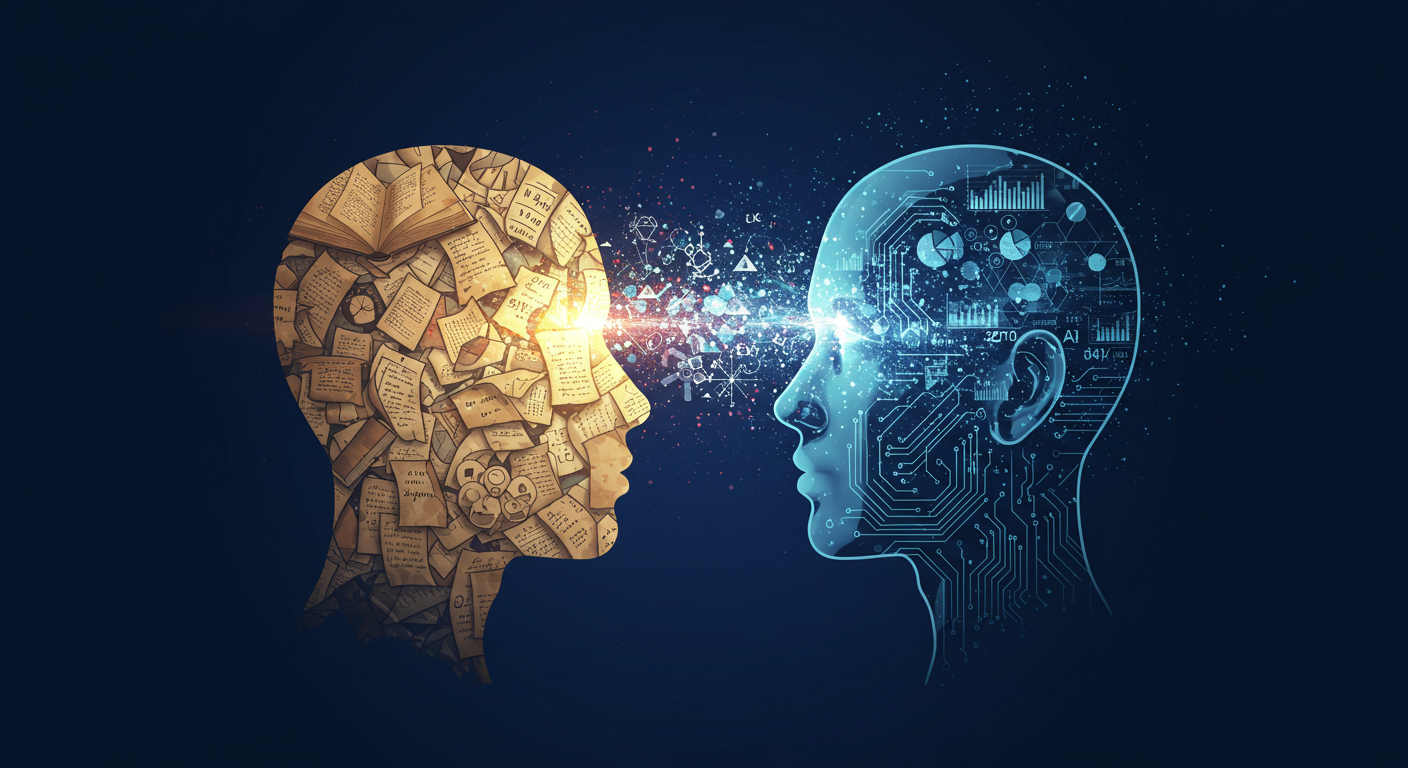
Using these tools, I’ve focused on:
- Developmental Editing: Identifying areas needing more sensory detail to truly immerse the reader, pointing out weak spots in the plot, or suggesting where character motivations could be clearer.
- Line Editing: Refining sentence structure, improving flow, and enhancing word choice.
- Copy Editing: Catching grammar, spelling, punctuation, and consistency errors.
I used AI to rigorously work through three different manuscripts I’m preparing for querying traditional publishers. The insights were invaluable. It showed me precisely where my descriptions were lacking the visceral punch needed to draw readers into the scene, and it flagged missed plot connections I’d completely overlooked.
The Stark Reality: Cost vs. Benefit
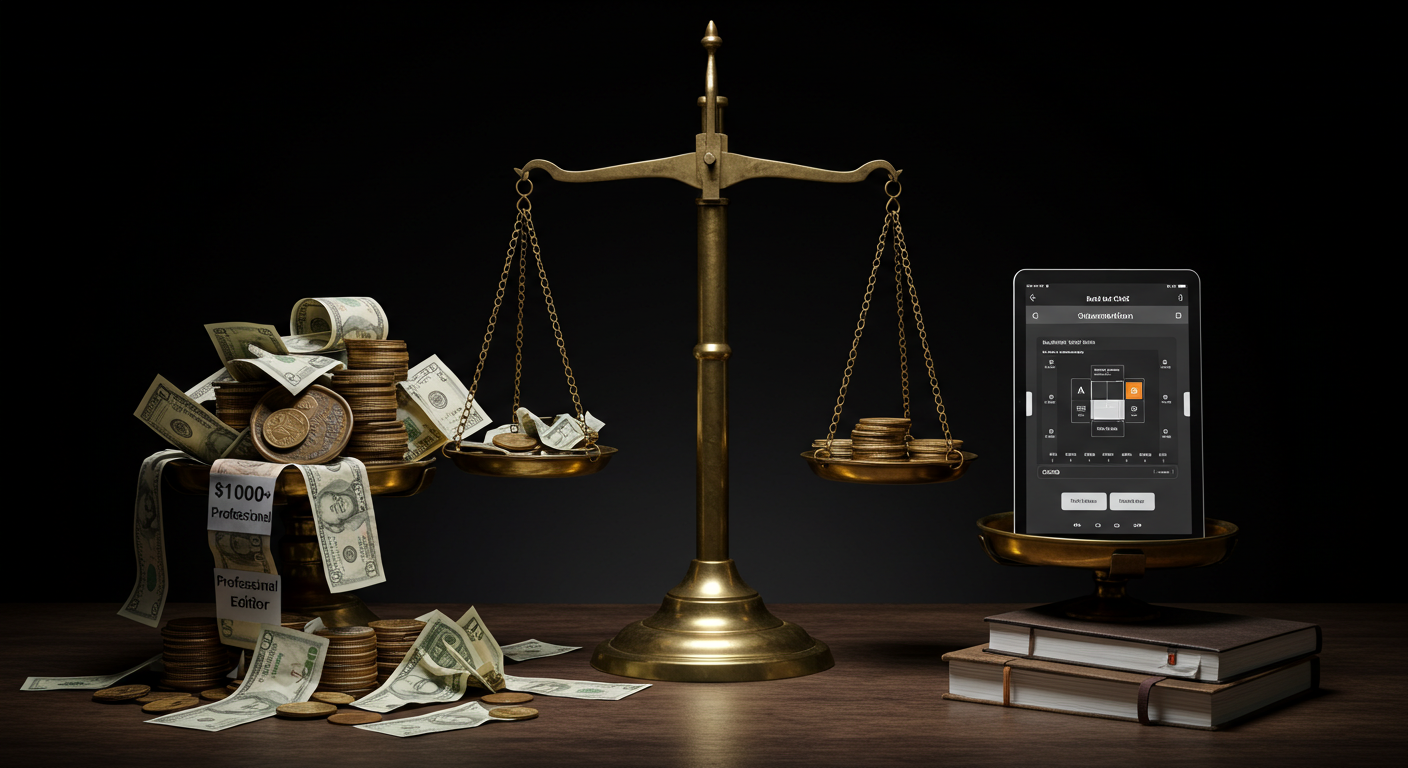
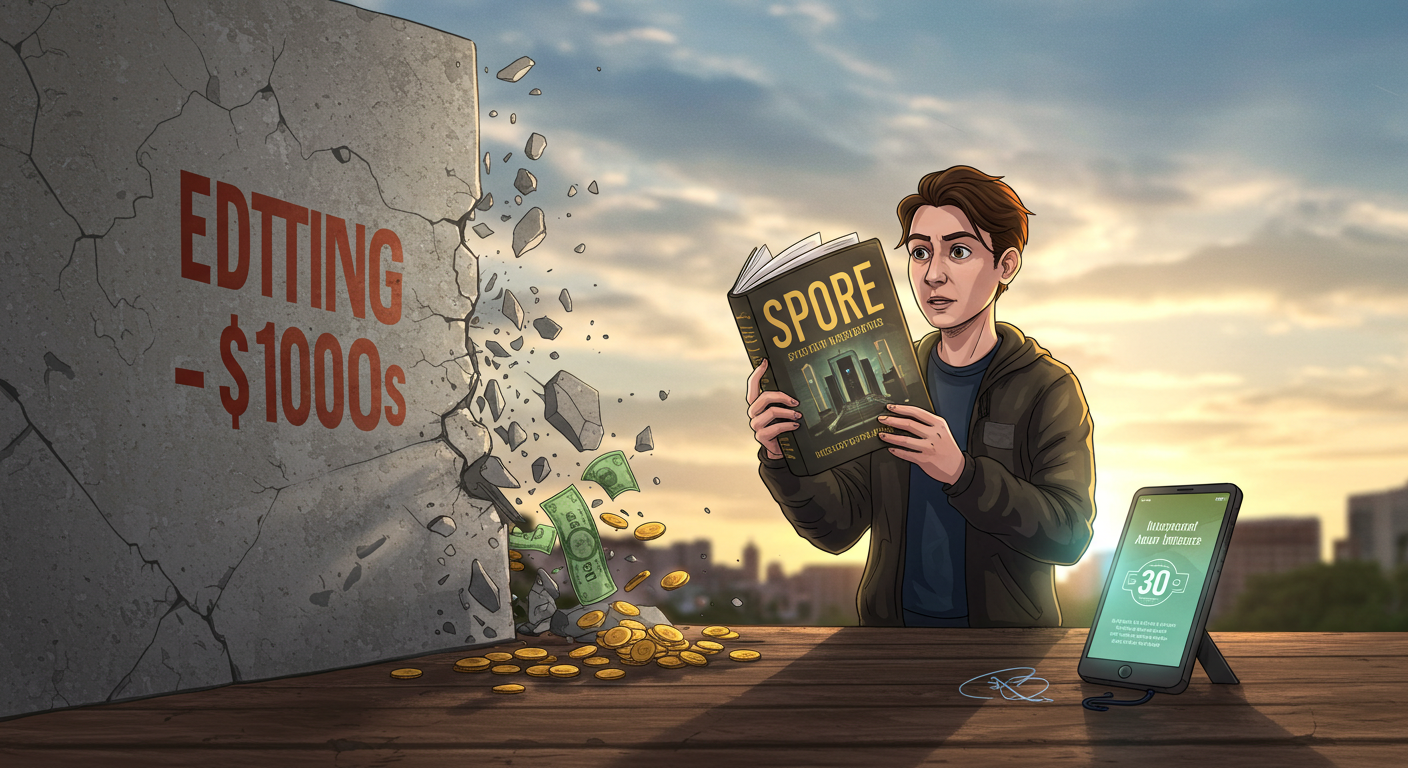
These are critical tasks. But professional editing is expensive. Getting a quote for just one of my books (around 60,000 words) came in at over $1,000. Using AI tools? My cost over three months for intensive editing across three books was a little over $30. For an independent author, that cost difference isn’t just significant; it can be the difference between being able to pursue publication or not.
Rethinking the “Theft” Argument
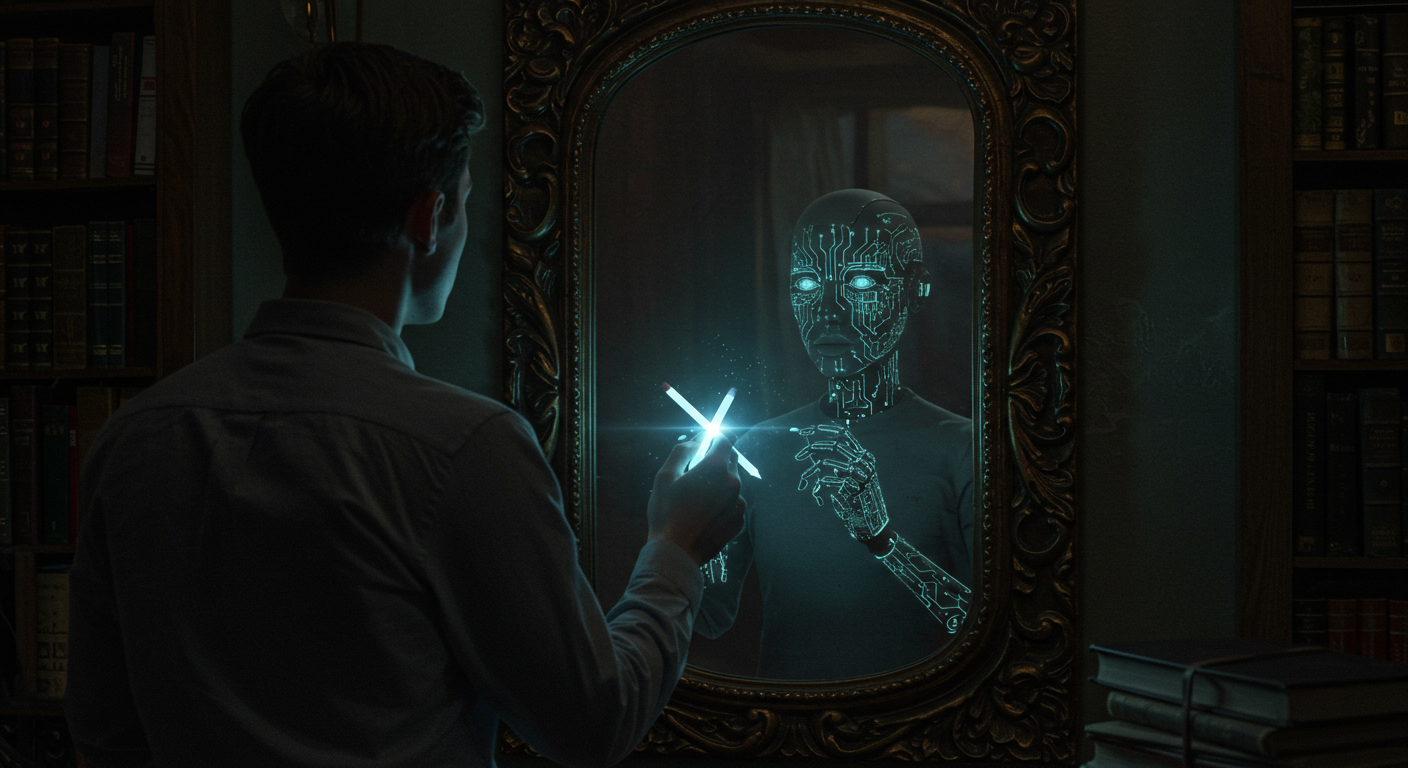
Coming back to the ethics – I’ve continued to wrestle with it. But a thought occurred to me: How fundamentally different is an AI learning from existing works compared to a human author? We read constantly. We absorb styles, techniques, and ideas from authors we admire. We stand on the shoulders of giants, consciously or unconsciously synthesizing what we’ve learned into something new. Is an AI analyzing patterns and creating something novel really that different from human inspiration? Does it inherently cause harm just by learning?
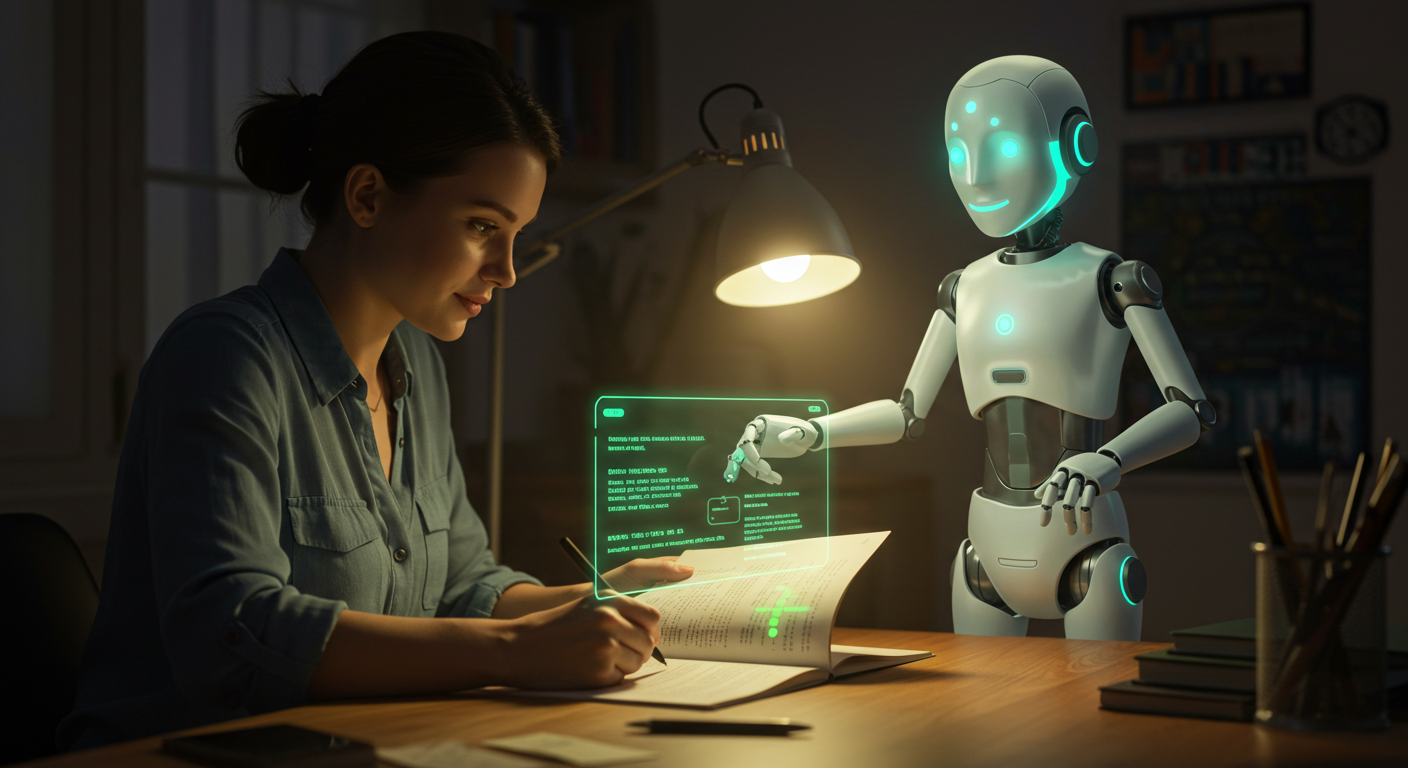
As these AIs become more sophisticated, perhaps even developing unique “personas,” how we interact with them, how we utilize them as tools, might just define a new chapter for creativity.
Moving Forward
AI is here. It’s powerful, complex, and undeniably disruptive. While the ethical debates surrounding data usage will and should continue, the practical reality is that these tools offer immense potential benefits for authors, especially those on a tight budget.
I’m planning to share more specifics on my blog soon – practical tips, effective prompts for Large Language Models tailored to author needs, and ways to integrate AI into your workflow constructively.

For now, I encourage you to consider the possibilities. The box is open, but maybe, just maybe, alongside all the chaos, there’s some hope, some opportunity, waiting for us to harness it.
What are your thoughts? Are you using AI in your creative process? What are your biggest concerns or discoveries? Let me know in the comments below.
Keep writing, and have a great one.
Later! Sumo Sized Ginger

 Sumo Sized Ginger